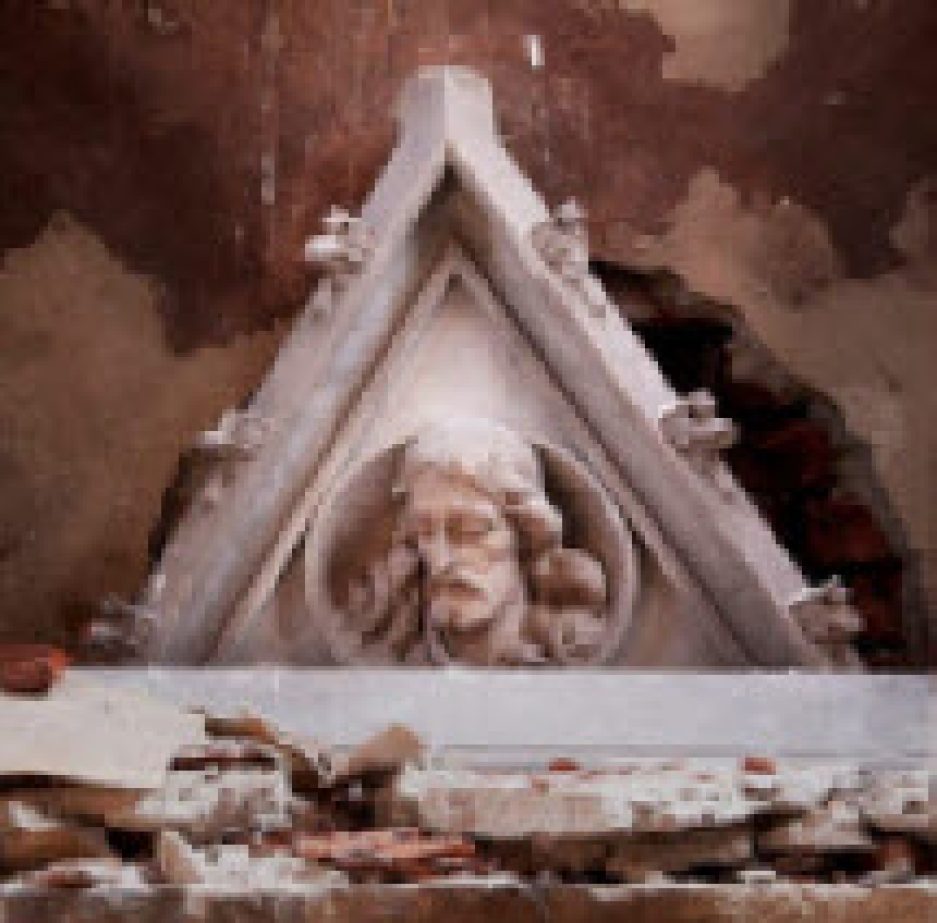
Discerning God’s presence

Jesus said, “You have now seen him; in fact, he is the one speaking with you.”  – John 9:37

This blog is about discerning God’s presence. He is here in everyday life, revealing himself to people. Even those who might not recognize it. God is making all things new, and everything in our daily routine – even its mundanity and sameness – is divinely preparatory to experiencing the truly real.  

I’m intent on knowing Jesus Christ as the destination of my inner longing. It began with a crisis of confidence in the terse doctrinal system drilled into my adolescent brain; namely that the world mostly contains people for whom there is no redemptive possibility. It preached that the only true belief was that an unalterable divine decree precluded the majority of humanity to have any opportunity whatsoever of living eternally with Him. Since Adam and Eve, men and women remain accursed and utterly without God, because pervasive sin makes people so filthy that they are repulsive to God.  We humans, have been stripped of our divine likeness. Irrespective of Christ’s mission to “preach deliverance to the captives and recovery of sight to the blind”, some, so they said, are unsaveable.  Hence, there is no point in bothering to share God’s reconciling love in Jesus Christ with the already-damned. God, according to the founding father of this particular movement, “determined with himself whatever he wished to happen with regard to every man. All are not created on equal terms”.  

Nothing could be more cruelly bereft of God’s mercy and love. Like many Christians, we sought good grades on the Great Commission. But we flunked the commandment to love people in a way that makes them feel loved. It is reminiscent of the Pharisee who prayer-boasted: “God, thank you that I am not like other people”.  Recalling those days, if they were not numbered among “the Remnant” (just us select few), they were unworthy of compassion, God’s or ours.  That is historical Christianity gone wrong. Such dehumanization isn’t the Jesus who ignored artificial religious boundaries that forbade contact with lepers and detested non-Jews. And he healed the untouchables, like a Roman centurion’s servant, or a Gentile woman’s daughter. Still more serious, he “unlawfully” healed on the strictly-observed Sabbath day of rest. Even the dogs were to be fed from leftovers from his table. A God bereft of compassion is not worthy of my worship. He formed man from the dust of the ground, not from a pile of shit.

The late Rachel Held Evans mused, “I would hate to think that God creates disposable people”.  She believed in God’s promise to love each and every human being that has ever or will ever live, instead of what’s termed “limited atonement”. As Ms. Evans called it, unbelieving people who have real lives and real names were seen merely as “pond scum” in God’s eyes.  God only loves the precious few who win the Divine Lottery. Others – before they ever commit a single sin – are not afforded even a chance to be saved and are divinely auto-deleted. As one Calvinist professor explained, “Everything God does to or for the reprobate in this life is deliberately designed to prepare him or her for eternal damnation”.  It reminds me of a quote, perversely twisting the message of Jesus. It was uttered by a distinguished dean of theology about those who are not Christians just like him:

The other peoples of the world – Muslims, Buddhists, and those of other faiths, as well as those Christians not born again – do not concern Him.

And yet those people – over your backyard fence and all over the world – are searching for love. They’re rooting around for ultimate meaning. They are literally dying to see God as friend and lover. You know many like that, feeling devoid of any divine experience.

There are those who have learned to sing “hymns to an unknown God”; seekers who may never feel the spiritual need to get up on Sunday and attend a church. Some are church exiters, saying “I’M DONE” with oxygen-starved theology – especially with polarizing politics commingled with the Gospel. Others are nursing wounds after having been pushed under a busload of sanctimony. These may have given up not only on the institutional church, but also are resentful towards God, and will never again bow the knee. And that doesn’t even begin to cover the self-directed spiritual seekers, who have never knocked on a church door as the only hope for a lost world. God loves them, as well.

At the end of the day, Jesus did not come to construct systems competing for First Prize in the most correct theology. God will always know more than we do. Neither did he come not to organize a mega business/church that offers the best life – but only on our terms. Religion tends towards becoming sediments layered to reach God instead of a divinely-initiated encounter, exposing our hearts and souls to the mystery of being touched by him. Action-oriented “doings” primarily about what we do for Jesus, not about what He has done for us. This is Christless Christianity, as Michael Horton explains in his book of the same name, “our practices reveal that we are focused on ourselves and our activity more than on God and his saving work among us”. 

Good. I got that all out of my system. This blog, on the other hand, reflects my desire that all mankind let go of self and be enveloped by Christ’s grace, discovering the means by which we meet God.  I mean to say God really doesn’t hate you like others say. I’m grateful to have escaped the black hole of a retributive God to find a fresh vision of divine love. I invite all God-curious men and women into the true universe filled with the freely giving of the divine Self, which we call grace. Not only does God act in love, he awaits our love in return. Our proper response is the mystical experience known as faith, a heavenly wisdom superimposed over empirical knowledge, and extending well beyond. “Leave your country, your family, and your father’s house, for the new land that I will show you”, God told Abram and Sarah, saying “I will surely bless you”.  We all find ourselves needy and find it difficult to be truly at home with ourselves and at peace in the universe. God invites us to go beyond our own comfort zone and undertake a life pilgrimage to something infinitely better. God will move you quietly forward in grace as the time is right. It’s okay if you’re not yet ready to take that step in your emerging journey towards faith. Jesus said he didn’t come for the healthy, but for those who need a doctor.  The Physician is ready to see you now, but He also has a capacious Waiting Room.

Welcome to God’s World

Train your thoughts to reverence Him in every place, for there is no place where He is not.[i]

Whether we know it or not, each of us is being drawn on a life-long journey to God. As we are wandering along the way, we encounter what C.S. Lewis called “’Patches of Godlight’ in the woods of our experience”.[ii] We live in a sacramental world. God is everywhere present and filling all things. And we are participants, often unawares. If we pay attention, we can see the clues of his presence in everything around us. This is a beautiful world in which God dwells with us, and where God’s love is always within reach. For the Christ-follower, it is “my Father’s world”, to whom the praise of a beloved hymn points:

This is my Father’s world,

And to my listening ears

All nature sings, and round me rings

The music of the spheres.

This is my Father’s world:

I rest me in the thought

Of rocks and trees, of skies and seas–-

His hand the wonders wrought.[iii]

Tony Campolo used to say there’s a little Christ in each of us. I experience the world from that perspective as well. The God I worship loves everyone of any and all faiths – along with those who lost theirs, or claim none. This book involves a journey shared with the average person who thinks that maybe there is a God. “But I can’t see him. And he’s far removed from the daily ups and downs I struggle with”. Maybe he’s a bearded Old Man upstairs, somewhere beyond our universe. “A God who didn’t care, that lived a way out there…”[iv] Maybe he doesn’t see me either, even if he exists. On the other hand, we may be afraid that God might really show up. Maybe he is there, and purposely intends my life to be miserable.

It’s funny how God seems so absent, except when you start to look and notice him everywhere. We see his majesty as we gaze into a star-light sky. Driving through the farmlands, we are reminded of God’s watch care over the cattle on a thousand hills. The image of God is revealed in the face of a newborn. In our various wanderings and daily doings with others. He is here, with each of us, in the exciting or in the mundane – in whatever circumstances we find ourselves. “He is not far from any one of us”.[v] Through their created existence, God whispers intimately to every human being.

The cosmos is a coherent whole, a created synthesis, united and interrelated in time and space. The created order is the good work of the good God. Only the human being conjoins physical and spiritual elements. Warts and all, we most definitely live and breathe in a material, yet God-inhabited, world.  For those with eyes to see, our earthly home is permeated by a spiritual realm. Spirituality is nothing like some esoteric practice of monks tucked away in some mountain cave. Spirituality is large enough to contain all of our lives, and is open for business to everyone. Everything about being alive is spiritual, because our very breath is on loan from God. It’s not about what you know; even demons know all about God. It’s about Who you know in the life you experience, especially in all its daily ordinariness. God leaves nothing out, and none of us are Nobodies to God. His image is not just something we have; it is who we are

We live surrounded by a spiritual world embedded within our physical surroundings. The kitchen, the workplace, the school, the hockey game, the supermarket, the pub, driving down the road, the hospital, the jail – literally everywhere and at all times. To see, to hear. to touch, to taste, to smell. All these are avenues which invite intimacy with the divine. God is here, in this place, with you and me. There is good in everything. And God is over all of it. He is neither silent nor absent but present in the universe and everything in it, redeeming not only ourselves but the entirety of the cosmos. “He is not a God that hides himself, but a God who made all that he might reveal himself,” writes George MacDonald.[vi] The realities of time, space and matter reveal God in all things; there is no place that is not sacramental. Mircea Eliade put this in perspective in his seminal work, The Sacred and the Profane:

By manifesting the sacred, any object becomes something else, yet it continues to remain itself, for it continues to participate in its surrounding cosmic milieu. A sacred stone remains a stone; apparently (or, more precisely, from the profane point of view), nothing distinguishes it from all other stones. But for those to whom a stone reveals itself as sacred, its immediate reality is transmuted into a supernatural reality.[vii] 

The image of God is indelible; it can never be separated from us or extinguished within us. In fact, it is the very obviousness of the divine image in us that makes our deformity of it so fearsome. It’s still there, and it’s clear what we’re supposed to be, which makes our deviance from it so grotesque. Regardless whether people of good will, or those have sinned grievously or rejected him. He specializes in rescuing those undeserving of mercy.[viii]


[i] William Law, A Serious Call to a Devout and Holy Life

[ii] C.S. Lewis, Letters to Malcomb: Chiefly on Prayer (Orlando: Harcourt, 1963) 91

[iii] Maltbie D. Babcock, “This Is My Father’s World” (1901), public domain

[iv] Ralph Carmichael, “He’s Everything to Me”, ©1964, Communiqué Music/ASCAP

[v] Acts 17:27.

[vi] George MacDonald, Unspoken Sermons, Vol. III (London: Longmans, Green and Co., 1891), 31.

[vii] Mircea Eliade, The Sacred and the Profane. (New York: Houghton Mifflin Harcourt, 1959), 12.

[viii] Ephesians 2:1

The Old has Become New

– 2 Corinthians 5:17

I began this blog 6 years ago, with the byline, “Welcome to a new evangelical blog”.

Well, things change, and so do people—and how they view reality. Truth stays the same; our viewpoints change. To keep it brief, this is no longer an evangelical blog. I have moved away from evangelicalism but not from Jesus. It feels more accurate to say evangelicalism has moved away from Jesus. This isn’t about being against evangelicalism; I’m just done and have moved on.

If you’re interested in exploring the remains of evangelical Christianity, I recommend Diana Butler Bass’ great book, Christianity After Religion.[1] She explains how things fell apart but also shows that Christianity has faced worse challenges in its 2,000-year history and is still here, thanks to the Holy Spirit.

“Sir, we would see Jesus” (John 12:21). That’s the guiding principle for this new direction. Many people believe in some kind of god and want to connect with the divine. But God is a spirit, and it takes a spiritual focus to see Him. Psalm 10 speaks about God being hidden: “Why do you hide yourself in times of trouble?” (v. 1) The Psalmist answers: “In his pride the wicked man does not seek him; in all his thoughts there is no room for God” (v.4). It’s our issue, not His.

God is present. He is not hiding; He is welcoming. While we might not make space for God, His Kingdom has room for everyone who has ever lived. There’s a lot to explore here, and it’s all very exciting. We’ll be developing these ideas moving forward, and I hope you’ll join me on this journey to God!

TGBTG

Stuart Thompson,

Twelfth Week After Pentecost


[1] Diana Butler Bass. Christianity After Religion: The End of Church and the Birth of a New Spiritual Awakening. (New York: HarperOne, 2012)